Youth Ambassadors and the Meaning of Poetry for Young People
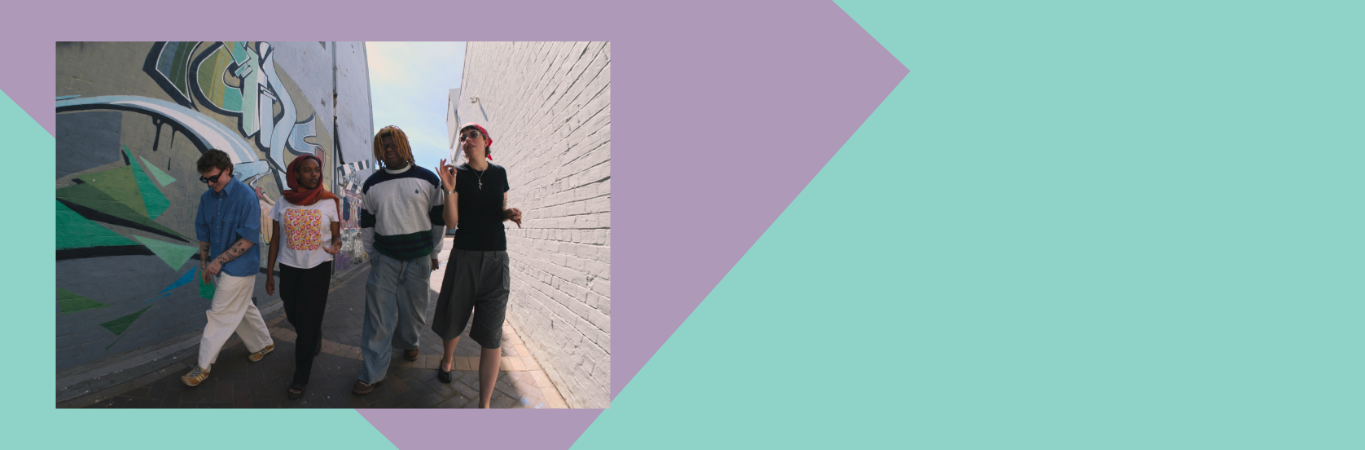
Fresh voices are shaping the future of poetry.
This year, Rataj Abdullah, Charlee Brooks, Maggie Knight-Williams, and Zafty joined Red Room Poetry as our first-ever Youth Ambassadors. Each of them bring a distinct voice and vision to the future of Australian poetry, from spoken word and rap to lyricism and storytelling.
As part of a national pilot program, our Youth Ambassadors have performed, written new commissions, and shared their insights into what poetry can mean for their generation. We sat down with each of them to talk about inspiration, creative process, and what’s next — plus a few quick-fire reflections to end on a poetic note.
Charlee Brooks (VIC)
Writer, content creator, and the creative force behind @grandpasbookclub_.
What first drew you to poetry, and how has your relationship with it evolved since becoming a Youth Ambassador?
Poetry felt like a natural progression for me. I’ve always been a voracious reader, and my obsession with certain writers eventually led me down the rabbit hole of verse. I fell in love quickly, with the way poetry can move through the body, how it can say something and then suddenly fall beyond language entirely. I’m drawn to its precision, its intimacy, and the infinite translations that occur between tongues.
Since becoming a Youth Ambassador, that love has only deepened. I’ve come to understand poetry not just as a personal practice, but as a communal one, an ongoing conversation across time, bodies, and generations. It has made me more attentive, more generous, and more curious about what language can hold and who it can hold space for.
Can you share a highlight or memorable experience from your time as a Youth Ambassador?
As a group, we were fortunate enough to travel to Newcastle for the National Young Writers’ Festival. The weekend itself was incredible; the conversations, the panels, the chance to share our work. But what I keep returning to are the in-betweens with other young writers.
The early swims at the ocean baths, the sharing of niche obsessions, the dinners that stretched late into the evening. Those quiet pockets of connection, surrounded by people who are endlessly curious, generous, and creative, felt like the true highlight of the program.
How do you think poetry can connect with young people or inspire change in your community?
For a long time, I think poetry has felt inaccessible to young people, suspended somewhere in a mystical cloud of the arts, untouchable. Whether or not that’s objectively true, it has been my perception, and the feeling shared by many around me. But I believe that’s changing.
Growing up always online, constantly connected, many of us are craving presence and intimacy with our own lives. Poetry creates space for exactly that. It invites us to look closely, to notice, to find language for what we might otherwise not. As that yearning deepens, I think the space for poetry, as a tool for reflection, connection, and imagining something new, will only continue to expand.
What themes or ideas are you most excited to explore in your poetry right now?
As much as I’d love to give you a clear answer, I have to admit: I don’t know. I used to be obsessed with knowing what was next, yet lately, I’ve surrendered to the not-knowing, and I’ve realised there’s a kind of freedom in that.
Poetry, for me, is a vessel for uncertainty, a place to listen and discover from. I hope my work continues to give me space to explore whatever arises in my body, in my language, in my queerness. And nothing excites me more than this becoming.
Looking ahead, what’s next for you creatively?
I’m currently working on the script for a play that will be showcased at the Bowery Theatre mid next year, created alongside one of my closest friends. While it isn’t poetry in the traditional sense, it is deeply rooted in language, memory, and truth, and in many ways feels like an extension of my poetic practice.
It has been a joy to be immersed in a collaborative process, surrounded by other creative people and building something that feels grounded in our bodies, our lived experiences, and our queerness.
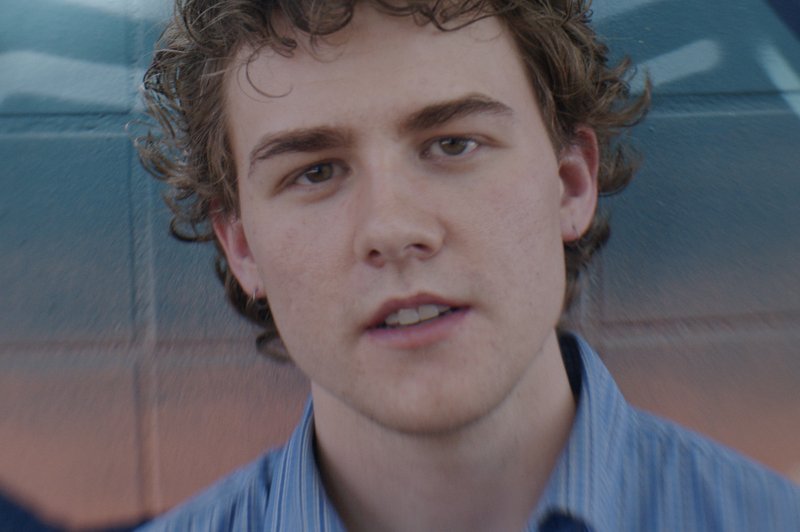
Charlee Brooks; image by Studio Esem
Quick-fire Questions
- A poet who inspires you? Andrea Gibson.
- A poem you love? 'Wishbone' by Richard Siken.
- A line of poetry you come back to again and again? Let the soft animal of your body love what it loves.
- A word you love? Lexicon.
- Where (or when) do you write best? In the early morning.
In tongues. We thrash around in the dark. The effort of speaking human. Translation. Do you know what I mean? Or are we lost? Drowning in blue. In heat. In tinnitus. Sucking old wounds and edges of skin with no turgor left.
Maggie Knight-Williams (ACT)
Poet, writer, and law student.
What first drew you to poetry, and how has your relationship with it evolved since becoming a Youth Ambassador?
I was first drawn to poetry by confusion. First, it was to do with my lesbian identity, and second, it was grief. My relationship to poetry has not evolved through the program other than becoming formalised. Although, that is highly significant. I am not writing about anything different or differently after the program, but I am thinking differently about writing. I didn’t know poetry could be anything but a personal endeavour until Red Room reached out to me.
Can you share a highlight or memorable experience from your time as a Youth Ambassador?
The National Young Writers Festival was very special. Most special was probably when I was talking to my fellow Youth Ambassador, Charlee, who is now a dear friend. We got wrapped up in a conversation about rediscovering music culture that was killed and buried by the AIDS crisis (and deliberate government neglect of Queer lives). We were so passionately sharing these gems that we didn’t stop talking from sunset til midnight. These small communions in art with other Queer people keep me alive. Everybody should listen to Patrick Cowley.
How do you think poetry can connect with young people or inspire change in your community?
Young people need to know that they can write poetry. It is discursively aggrandised. I’m aware I’m guilty of it in that sentence. People talk up poetry too much, to the point where it’s held over us as a white literary tradition, almost an historical tradition at that. Education and exposure can reinstate poetry as a layman’s tool. This will bring young people, and importantly, normal people, to poetry. There is already plenty of change being made in Community, people just need to listen out for it. Poetry holds a mic to change.
What themes or ideas are you most excited to explore in your poetry right now?
I am in a highly transitional period of my life. I’ll be leaving dhawura Ngunnawal soon, which breaks my heart. I don’t know how to leave a land. I will have to deal with that in poetry.
I’m also in love and looking forward to writing more about that, as I think its important to beat my poetic tendency to agonise about the world.
Aside from my poetry, in which I can’t help a little navel-gazing, I am hoping to get into essay writing. Yesterday I finished my law degree, so I am going to fill its space by researching and writing about some of my many niche, popularly uninteresting, interests.
Looking ahead, what’s next for you creatively?
Other than a budding essay on the horrible spectacle of putting bog bodies on show in museums, I haven’t got any projects on the cards.
The Youth Ambassador project is the first time I’ve been so actively encouraged to be creative. That’s been quite daunting, so I think I’ll take some time to think about what I want out of writing before I put anything out in the world. To help me think, I’m going to travel, grow up a little, pay attention to the incredible Queer and BIPOC creatives brimming from the folds of this country, and spend more time in the ocean.
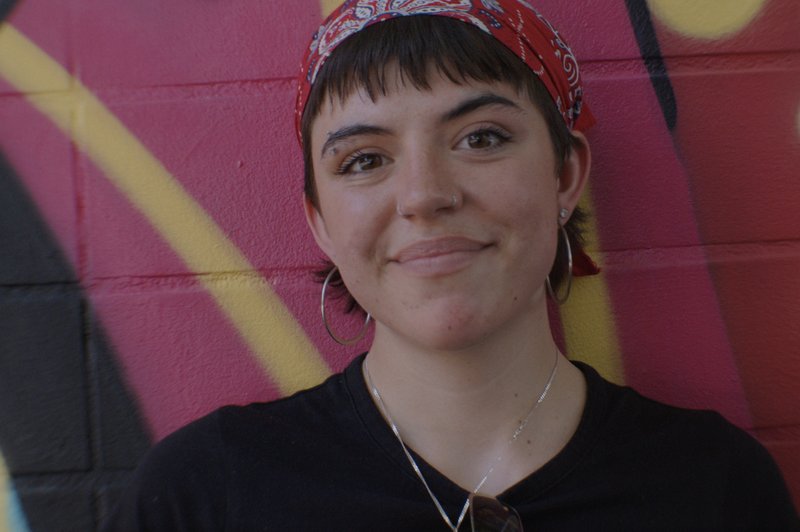
Maggie Knight-Williams; image by Studio Esem
Quick-fire Questions
- A poet who inspires you? Leslie Feinberg.
- A poem you love? 'The Rime of the Ancient Mariner' by Samuel Taylor Coleridge.
- A line of poetry you come back to again and again? “You are the knife I turn inside myself.” — from 'Letters to Milena' by Franz Kafka.
- A word you love? Kick.
- Where (or when) do you write best? After long commutes.
Type A that didn’t graduate,
aunty says “self-manage” when she means masturbate,
I reckon, don’t mixing with whites only matter when you’re straight?
call me a liability with teeth, self-medicated lightweight
Zafty (WA/VIC)
Rapper, poet, Unearthed High Finalist (2023) and featured in Triple J’s ‘Most Underrated Flow’ segment.
What first drew you to poetry, and how has your relationship with it evolved since becoming a Youth Ambassador?
Poetry has always been the one place I can speak to myself honestly, deeper than the performances I put on when I go into the world and try and be a ‘good person’ or a ‘good man’ or a ‘good anything’. To me, it’s like holding a mirror up to myself and seeing what i really think and believe. I feel like becoming a youth ambassador really brought me into a different context when it comes to creating my poetry, as mine is usually through music. The program was really fun and put me out of my comfort zone. Forcing me to go back to my roots!
Can you share a highlight or memorable experience from your time as a Youth Ambassador?
I’d definitely say going to Emerging Writers' Festival, I had so much fun talking to other writers and creatives about our different practices about the ways they get their art into the world and a multitude of other things.
How do you think poetry can connect with young people or inspire change in your community?
I feel like poetry can be a way for people to understand themselves and an outlet for young people to just talk. No matter how it comes out — and I think that is really important.
What themes or ideas are you most excited to explore in your poetry right now?
Growth. And the messy parts of it. I feel like I’m still in a stage of ‘becoming’ and I find that it’s something I enjoy talking about a lot.
Looking ahead, what’s next for you creatively?
I really want to create a world and a story with my music, hopefully these upcoming projects I’m releasing will help me do that!
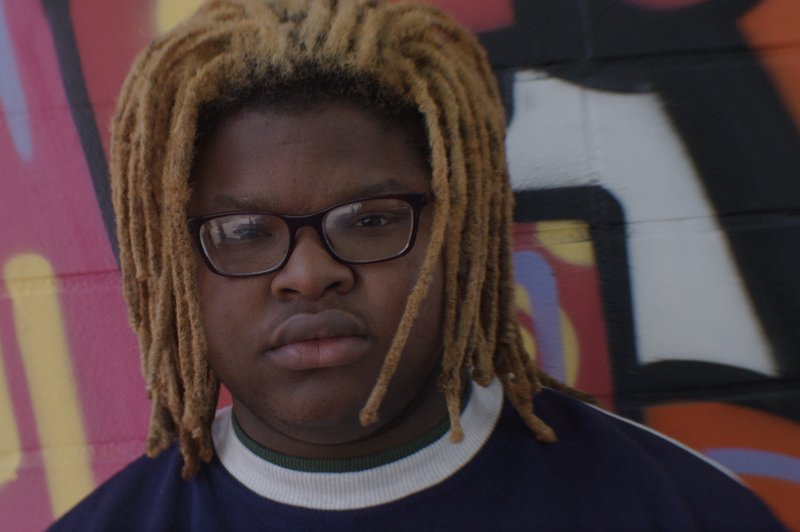
Zafty; image by Studio Esem
Quick-fire Questions
- A poet who inspires you? Kendrick Lamar.
- A poem you love? It is a song, but 'Survival Tactics' by Joey Bada$$.
- A line of poetry you come back to again and again? "When it feel like living’s harder dyin’, to me givin’ up’s way harder than trying", by Kanye West.
- A word you love? Swag.
- Where (or when) do you write best? By myself in my room!
See…I’ve been a poet since like…year four?
…Yeahh I remember, I started stringing syllables like lifelines.
Learnt to link my language tighter
YKnow, articulate it more
Rataj Abdullah (Regional NSW)
Spoken word artist, community organiser, and Australian Poetry Slam Finalist (2023).
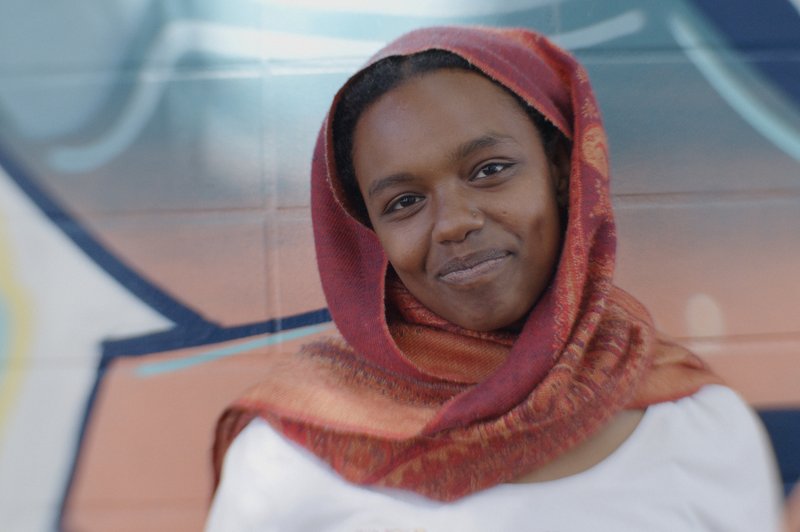
Rataj Abdullah; image by Studio Esem
"A mouth unlearning silence.
Fire shaped like a question.
The crack where light remembers.
Not survival
but the art
of refusing to vanish
beautifully."
I was born into a world already on fire.
The skies stitched in smoke before I learned to say my name.
History cracked like a fault line beneath my crib,
and the lullabies were sirens softened by my mother’s hum.
To learn more about our youth programs, keep an eye on our channels. Sign up to our newsletters and follow us on Instagram, Facebook and LinkedIn.